Response to Neurodiverity article as a strength not a disability
Chris,
Thanks for this wonderful article byThomas Armstrong, Ph.D.
What Dr. Armstrong’s imagination and metaphor of flowers is powerfully revealing is when people don't fit the perceived picture of what they are supposed to look like, as a specific kind of flower, because our dimensions and our characteristics may be different, we are automatically labeled and put into another category associated with a negative perception.
In the mental health world of professionals who make diagnoses, the labels of disorders lead to all kinds’ negative perceptions and poor self -esteem for the individuals who are tagged with the diagnosis. Dr. Armstrong refers to an article in the Archives of General Psychiatry which reported that over the course of their lifetime, roughly one half of all adults in the United States will suffer some from of a mental disorder.
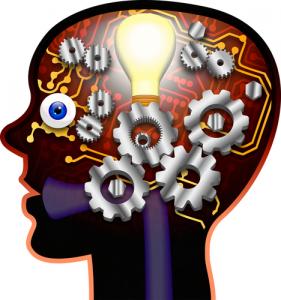
We need to stop perpetuating labels that position differences as negative psychological problems to be fixed and start looking at differences as neurodiverse ways our brains can successfully work. We need to identify and embrace the unique ways individuals use their genetic hardwiring to consistently achieve excellent results. We all possess as innate, recurring patterns of strengths that we naturally utilize to create more, success fulfillment and joy in our lives. When we use them in ways that are perceived different or weird does that make us broken even though the outcome has been positive? From my vantage point, I say an unequivocal “NO.”
You are right Chris; this article is precisely what well trained ADHD coaches want their clients, children and adults, with ADHD to embrace as well as all those health-care professionals, loved ones and friends who support them. We want them to embellish the natural unique brain wring they possess as part of their neruodiverse, genetic blueprint and integrate their successful differences into their daily lives.
When we look for the unique differences each individual employs to consistently reach success why do we need to call it anything other than their natural talents. These unique and successful ways of doing things need to be embraced and integrated more frequently into their lives.
The rest of the world especially health care professionals who look for deficits, disabilities and problems need to have an open mind about the trillions of different options human beings have available to process, learn and act in the world.
Just because an individual’s preferred brain options do not fit into a limited, defined description of what is “normal”-if in fact there is such a thing—does it make the person broken or need to be associated with a DSM-IV diagnostic label. I believe it makes it their unique way of doing things.
Rather than labeling every person’s differences as a psychiatric disorder how about embracing their diverse ways and finding out how they can successfully use them in today's world. Once we do we can encourage them to integrate them in ways aligned with positive objectives the individual can pursue? Wouldn’t that provide them with a purpose to use their differences in ways they do things naturally well? Wouldn’t it be more fulfilling for them to wake up every day without a label that says something needs to be fixed vs. here’s what you do differently but you do really well?
Embracing neurodiversity, or the unique brain wiring in each human being, says that there is inherently something we all do well. The issue is not to fit the standard of what is not working. The focus, for children and adults with ADHD, needs to be: What is it that they do differently and consistently well and encourage them to do more of it!!!!
Lastly, we have created educational environments that limit the ability of each child and adult to integrate their unique brain wiring in ways that allow them to naturally learn.We have mass-merchandised education with standardized testing vs. customized exploration and discovery. If a child is kinesthetic and learns through movement she has to sit still in the classroom when bored and cannot be engaged through conversation or creative discussion with the teacher. When she can’t remain still in her seat, she is reprimanded or sent to the principal’s office for detention. Or when the curious child is bored and cannot ask questions he has to blurt things out to stimulate his brain; or the young girl who doodles in her notebook who is tuning out because her monotone teacher is not engaging any of the students in conversation. These are just a few examples. The list goes on.
We need to learn that human beings process, learn, and communicate in different ways, trillions to be more exact. There are many creative and unique ways of creating learning environments which are more conducive to the neurodiverse ways our brains optimally function.Schools around the world, with some creative thought, could find innovative and inexpensive ways to integrate diverse teaching options that would significantly improve the ability of neurodiverse kids to learn. It would also enrich the learning experience for all students in the same classroom!!!!
Open-minded teachers, employers, health- care professionals, parents, friends need to promote neurodiversity as strength to be encouraged, not discouraged, and integrated into a child’s life. It needs to be reinforced as an attribute, to be frequently used, so the individual’s part of their brain, applying that strength, will become stronger and so will their self image.